justina forever

putting one foot in front of the other since i could walk

  • manifesto

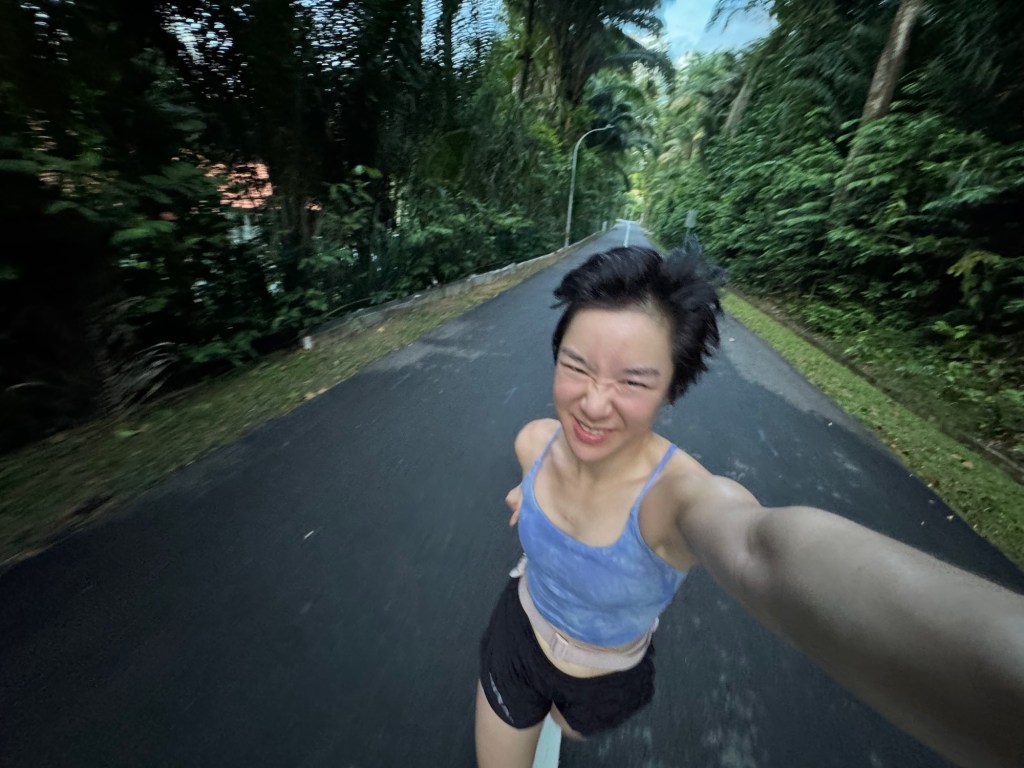
    Alarm. Snooze? No. Get the fuck up! Index card on bathroom mirror: DRIVE CAPACITY DISCIPLINE. Aggressive? Don’t second-guess yourself. Shoes on, out the door. Time to run! Darkness. Serenity Prayer a song in your head to the rhythm of your gait. God, grant me the serenity to accept the things I cannot change, courage to change the things I can, and wisdom to know the difference. Repeat prayer until anxious thoughts quit unwinding in your head. Crickets, chickens coocoo-croocroo in the trees, the frantic glissando of a straw-headed bulbul, a bird with a low voice like bubbles on water. Bats swoop near your head, squirrel skipping across the road, pair of dachshunds, golden retriever with thick white eyebrows. Good morning to the regulars: man with glass water bottle in right hand, teenaged boy in school uniform eating sandwich, two women gossiping before workday, couple matching strides in silence. Street lamps snap off at 7:16. Two days ago it was 7:17. Trees growing on trees. Brown leaves fluttering to the ground. Clouds like cotton candy. I think life is nice.

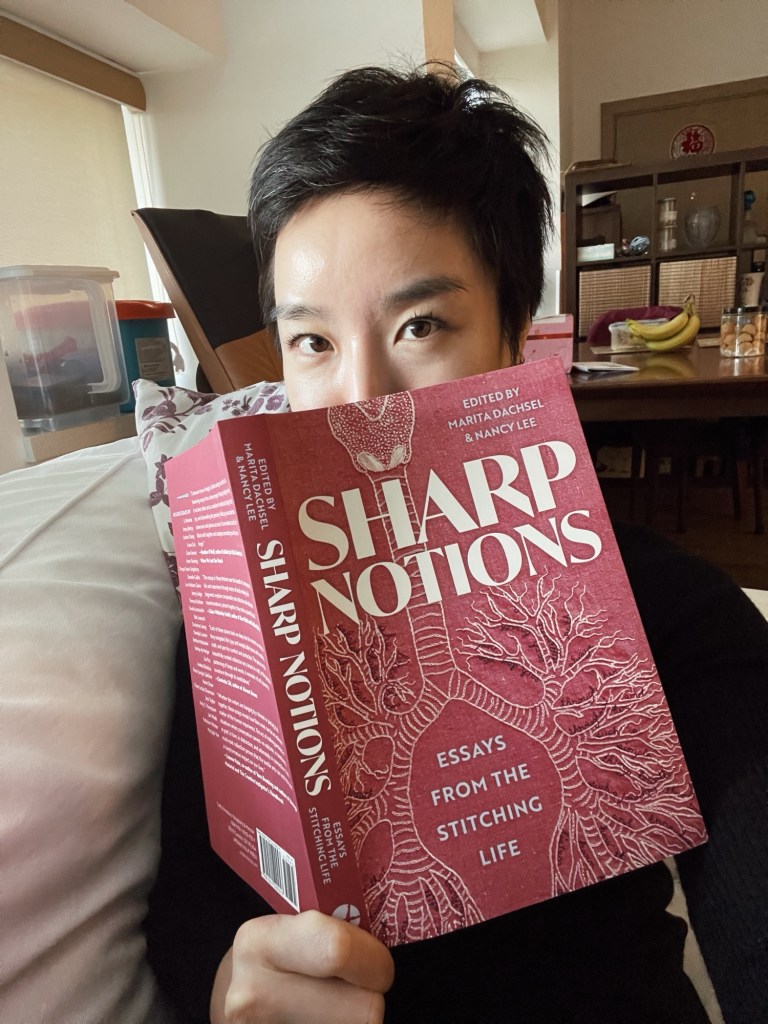
  • This post is a little late, but I am happy to declare on my blog that my story, “The Boyfriend-Sweater Curse,” appears in Sharp Notions: Essays from the Stitching Life, alongside writing from twenty-seven writers in Canada, the US, and beyond.

    How cool it is to hold my story in my hands, but cooler still has been reading all the other stories in the anthology, about family, culture, heritage, migration, the environment, illness, identity, loss, healing, stillness, community, resistance, and the role making stuff plays in our lives.

    The other day I received a delightful message from a friend’s mum in Toronto. She had opened a copy of this book and chanced upon my story as she rode the streetcar wearing a pair of mittens I made her a decade ago. What are the odds? That put a huge smile on my face!

    In truth I have picked up neither needle nor pen for quite some time, but this anthology reminded me why I knit and write to begin with: it’s my way of making sense of the world, of filling it with richness, color, and meaning and feeling connected to other people.

    Thank you to Marita Dachsel and Nancy Lee for including me in this special project, taking such good care of my story, and helping me to become a better writer, and to Catharine Chen, Brian Lee, and the folks at Arsenal Pulp for putting out such a cool book.

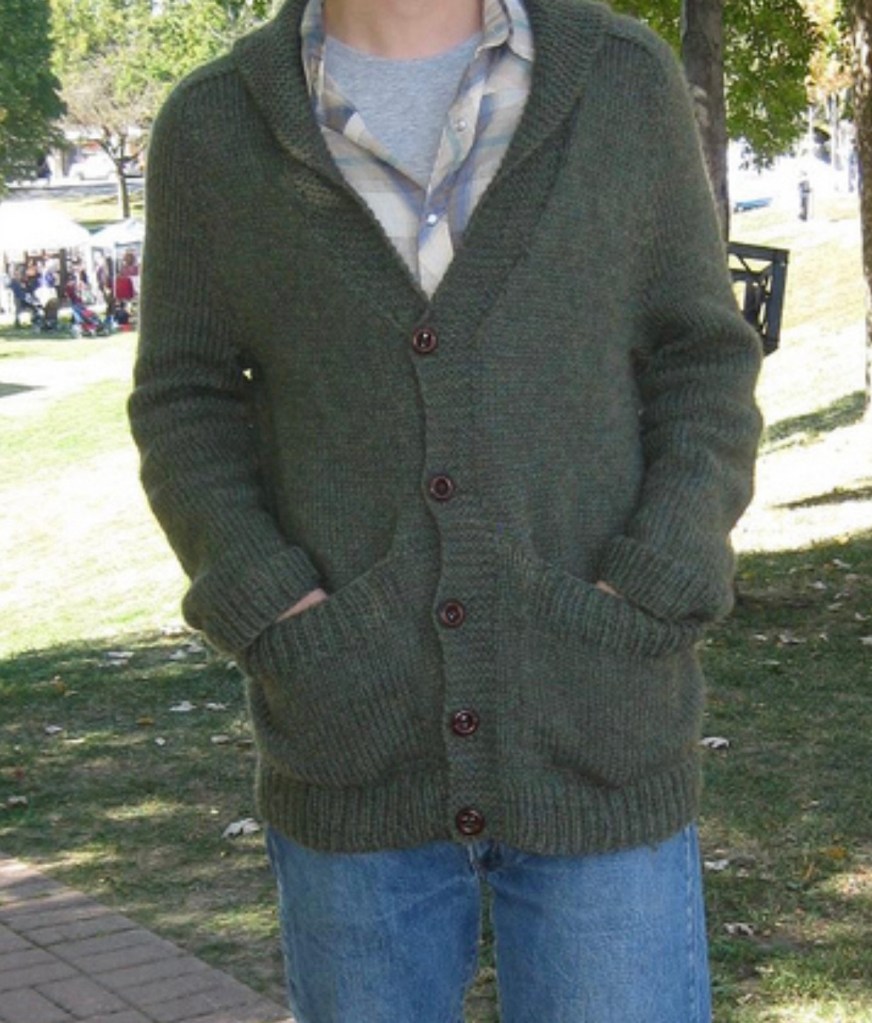
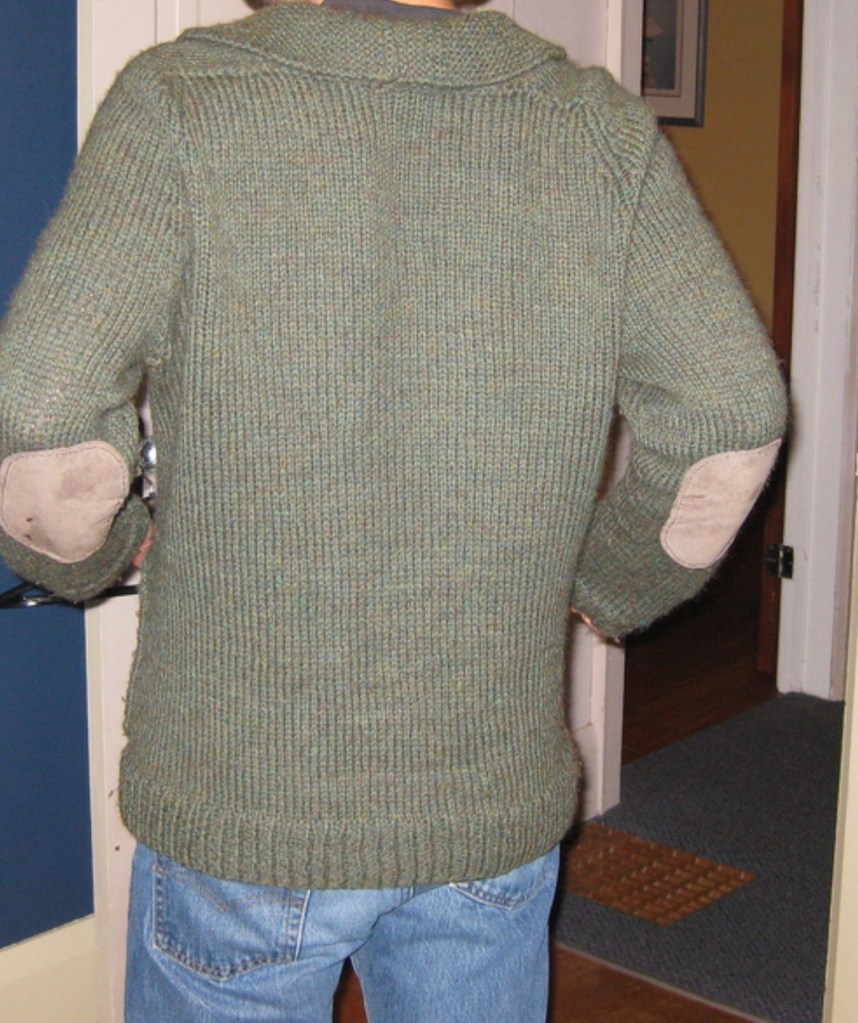
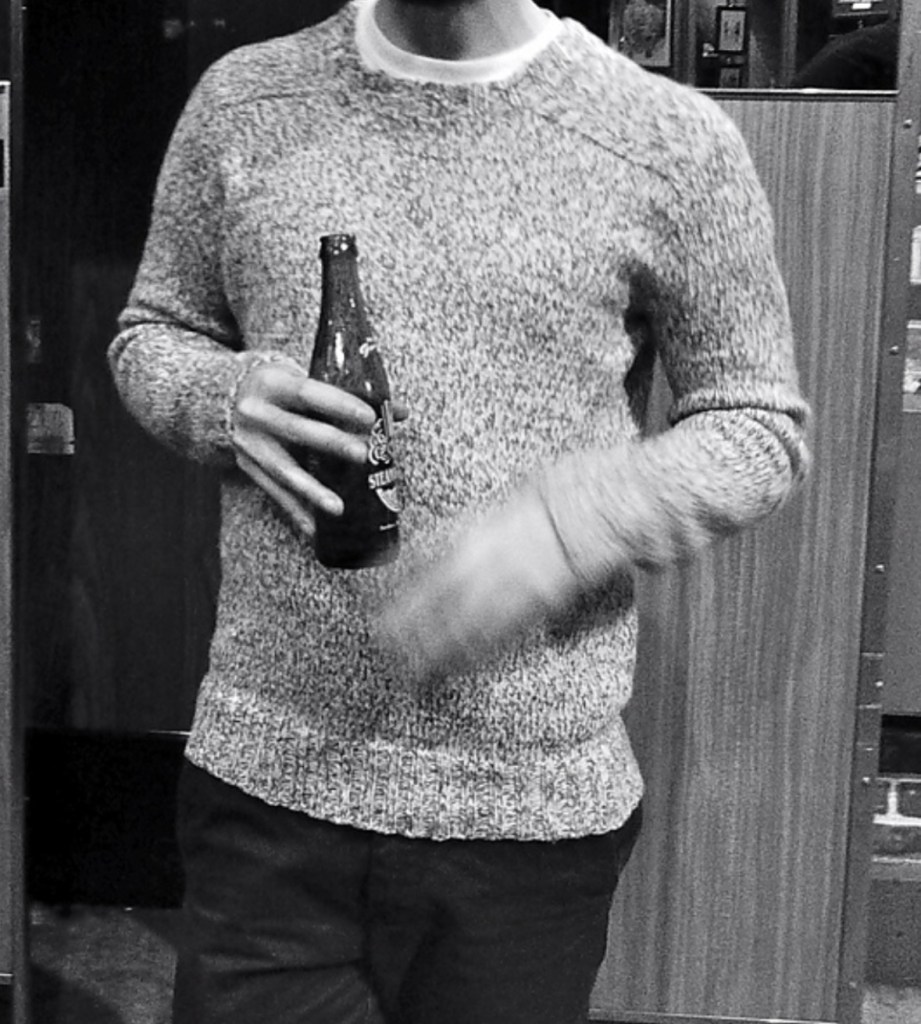
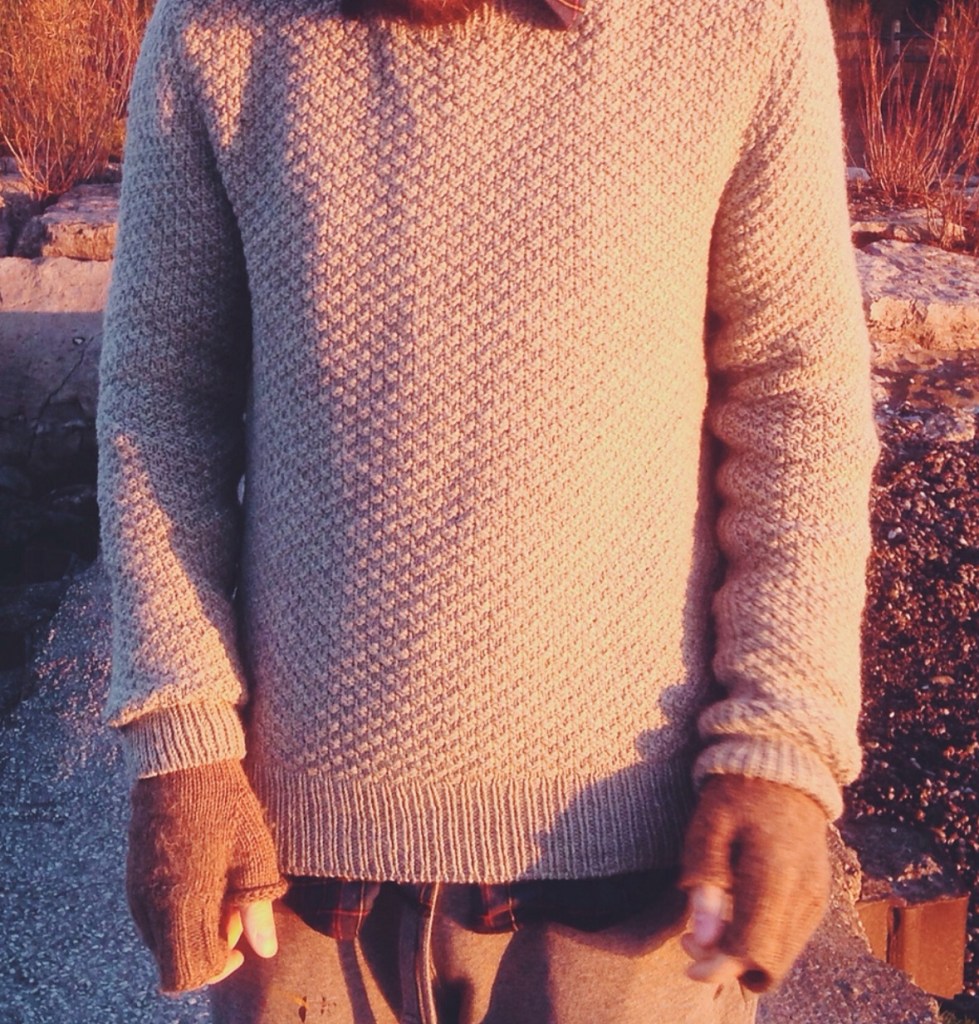
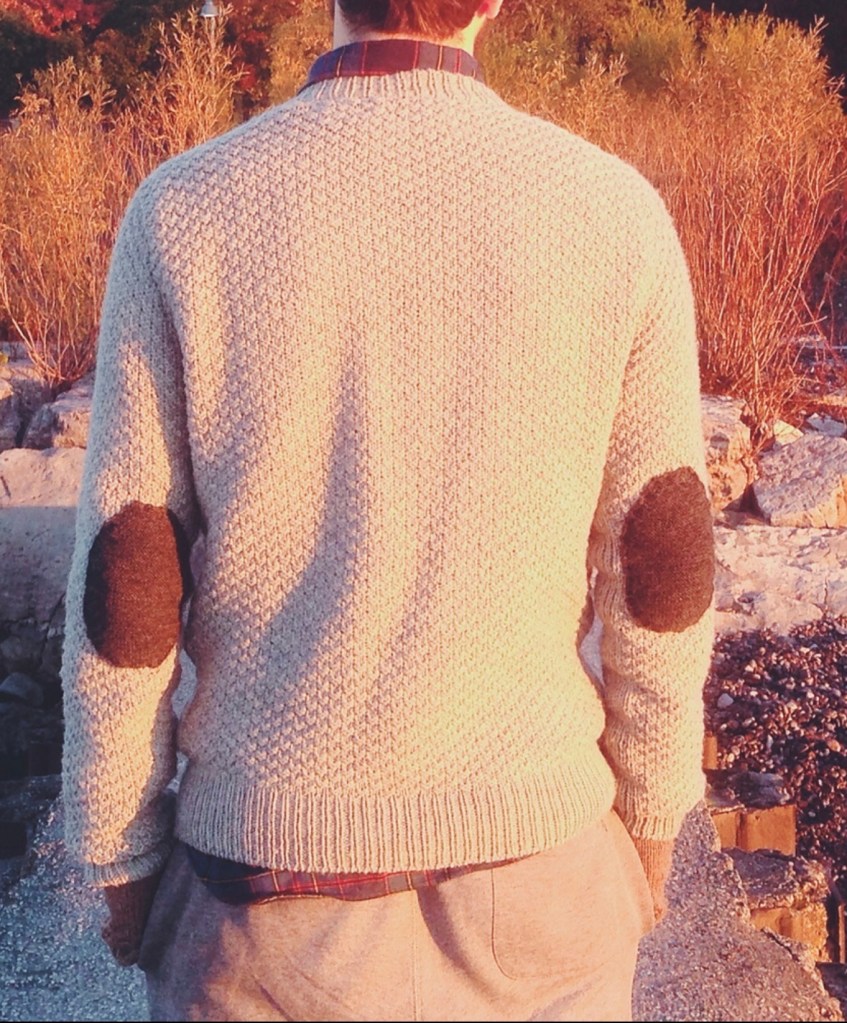
    With that, dear reader, I leave you with some photos of the ill-fated boyfriend-sweater-curse sweaters from 2010-2014.

    “Boyfriend sweater” #1: Enormous pockets for hoarding those tiny hard candies you get when you leave a restaurant after dinner
    “Boyfriend sweater” #1: Elbow patches
    “Boyfriend sweater” #2: Knit using a “recipe” from Elizabeth Zimmerman’s Knitting Without Tears (some tears were indeed shed because the saddle shoulder made no sense to me, but I trusted the process and it worked out like magic)
    “Boyfriend sweater” #3: Wow, I must have been VERY in love to put up with such a tedious stitch pattern…
    “Boyfriend sweater” #3: Even the elbow patches were tedious to make

  • Across the street from my neighborhood compound sits a small grocery shop. I had hoped in my heart of hearts to make it mine. It had everything I needed: fruit, vegetables, tofu, even some meat. The summer peaches were plump and juicy, the grapes bright green and turgid. Best of all, it’s so close to my home. But my dreams were dashed by the mewing of a tiny kitten scampering, unseen, somewhere among the crates of potatoes and corn. I followed her mews all the way to a cardboard litter box tucked away in the back corner of the shop next to the onions. There I found her hopping between the onions and kitty litter with not a care in the world. A cute sight to see, sure, but soon the question of hygiene eclipsed all else. Never mind that onions are encased in protective skins and that kittens are cute; suddenly the shop seemed a little darker, mustier, and dirtier than I liked. I stopped patronizing the shop that day.

    The other day the kitten sat at the entrance guarding a crate of tomatoes. She’s twice as big now because she’s a teenager. When I stooped down to tease the cat, the shopkeeper said, “Long time no see! You haven’t shopped here in a long time.” (Four months and three days, to be exact.) Rather than explaining my thoughts on the onions and kitty litter, I gushed on and on about wow, how big the cat is, wow, how cute she’s become! I felt a pang of guilt. It’s true: the less we know the better. I sometimes wish I’d never discovered Littergate.

    I didn’t want to tell the Madame Littergate that I have a new market to call mine now, up the block and around the corner. This market is brightly lit, not musty at all, and covers all the major food groups: seafood, meat, eggs, fruit, vegetables, mushrooms, and pickled things. Plus, there is a diary shop next door. Here you can buy different varieties of peaches and grapes, the peaches pale as a fresh pair of sneakers or yellow as a meadow of sunflowers, the grapes fat like water balloons. Here you can find all kinds of mushrooms – white buttons, oysters, enoki (aka 明天见, so called because they pass through your system intact, so you can see them the next day in the toilet), shiitake, cremini, portabello, and other varieties I don’t know the names of.

    The only downside here is the vegetable man smokes like a chimney, lets the ashes fly while he arranges the potatoes in neat rows or stuffs 5 kilograms worth of eggplants into a giant bag in the middle of the night (perhaps for a restaurant that produces baba ghanoush, is my guess). The first time I went into the shop, he told me he couldn’t take his eyes off me (hopefully not in a creepy way). “Your hair is so short, but it really suits you!”. Now whenever I go into the shop, he says, “Ha? Your hair STILL hasn’t grown out yet?” Maybe one day I’ll go in with a wig.

    Once, the vegetable man asked me why I always buy the cheapest variety of mandarin oranges. It’s because I like my fruit to be mildly tart. How can anyone resist the crispy tang of a Granny Smith apple? When I’m feeling extra fancy, I treat myself to a Granny Smith apple (or something that looks close to it) from the international imports supermarket. Only when I’m feeling extra fancy.

    I struggled to come up with something interesting to write about today, but writing this post made a bunch of other topics pop up in the back of my head. Note to self on other things I can write about: retired aunties, going to the park, the security guards, things my Chinese teacher tells us that aren’t in the textbook.

  • Every day after class, I head to the school cafeteria to get something quick to eat before I go home to work. There are several canteens strewn across campus, with types of food from all over China (this week they even have hairy crab), but today’s post isn’t about food. It’s about cafeteria traffic.

    Here’s how it works. On one side of the cafeteria is the area where you get your food; the other side, tables and chairs. All over the walls, posters ask students not to save seats with their backpacks, but we all have banner blindness now, so the tables and chairs are occupied not by human bums but by backpacks and other personal objects like keys, pens, and even a solitary piece of Kleenex. You and your friends plop your stuff down on the table you like and then go to the food area. Since I have no friends here, I never save a seat for myself.

    The food area is basically a bunch of stalls with windows. There are all sorts of stalls.At some windows, trays of prepared food wait to be doled out. You tell the cafeteria worker which food you want, they ladle it out onto a tray, and they weigh your tray and charge you through a student card or QR code. You can order noodles made the way you like. You can order Japanese curry. At the hotpot-type stalls, you grab tongs and fill a bowl with whatever meats and vegetables you want, and then the cooks cook it up for you. Prices are maybe half what you might pay off campus. Sometimes you have to wait ten minutes while your food is prepared before they call your number. You pay for your food at the stall from which you order it.

    I think the chaos of the cafeteria is exacerbated by this seat-saving phenomenon, which leaves people who haven’t saved seats hopelessly clutching their trays with soup sloshing over the lip of the bowl searching for a place to sit while all the tables are covered in bags and pens and keys and a single Kleenex and other random belongings.

    It made me think back to when I was an undergrad, and how the flow of traffic was so different in that cafeteria. The area where you could get food was separated from the eating area by workers at cash registers. You would enter the cafeteria through the “get food” area, pay for your food, then proceed to the seating area. Nobody really saved seats, I think because of the flow of traffic.

    Come to think of it, though, the likelihood of someone stealing your backpack was not low, so there’s also that.

    It also made me think of how it’s very common to see people eating alone here, one hand shoveling food into their mouth, the other operating a mobile phone while they watch videos. This happens everywhere, not just in the cafeteria. But when I was an undergrad, I remember some of my friends thought I was super weird for eating alone sometimes. Another thing that strikes me is that men and women don’t really seem to mix on campus here.

  • Today in class we learned a bunch of things related to bathing and showering:

    • 浴 (yù, to soak or wash the body)
    • 洗 (xǐ, to wash the body or part of the body)
    • 沐 (mù, to wash the head)

    My teacher did his master’s in classical Chinese, so he likes to sprinkle factoids into his lessons. He explained that there exists a specific word for “washing the head” because, in ancient times, people had very long hair, so washing your hair was A Whole Thing. But the word 沐浴 has since evolved to take on a more abstract, literary meaning, like bathing in the sunshine (沐浴着阳光) or bathing in your parents’ love(沐浴着付么的爱).

    He also talked about bathhouses in Korea (汗蒸房) and China (洗浴中心). He said modern bathhouses have exploded in popularity recently because of Korean TV shows (which I’ve never washed, but I’m guessing some of them take place in bathhouses?). Modern bathhouses are a place to hang out with your friends (or escape from your family): have a shower, soak in a bath, nap, eat snacks, go to the sauna or steam room (or maybe both), and relax.

    He then explained that old-timey bathhouses (澡堂) were popular in the north because when the country was poorer and people didn’t have bathrooms at home, that was the only place they could go to wash — plus, the water in the bathhouse is nice and hot. Why stay home in the dead of winter, shivering all by yourself, when you can gather a bunch of friends and kick it at the bath house in the warm steam? He said if you and a pal go to a bathhouse together and scrub each other’s backs (搓背), then you are no longer 外人 (outsiders); you become 自己人 (“one of us”). 

    Our university campus has many bathhouses, but I’ve never actually seen them. Maybe I will notice them now that I know they exist, the way I never really noticed bicycles in Hong Kong until I started riding one around the city myself. I’ve never been inside the dormitories here, but apparently, the local students and foreign students live in completely different living situations. The dorms for local students sleep four to seven students in a room, all in loft beds with desks beneath them. There might not be an en suite bathroom; if there is, there might not be hot water, or there might just be a sink and a toilet but no shower. The dorms for foreign students sleep two to a room with an en suite fully equipped bathroom. 

    This means when local students want to shower, they have to leave the dorm to go to one of the bathhouses. One of my Korean classmates says when she stays late on campus, she’ll often see groups of students wearing pajamas toting buckets with shampoo, conditioner, flip flops, soap, loofahs, etc., walking to the bath houses together. 

    Then our teacher told us that when he was in university, he and his friends would hit the showers together, and scrub each other’s backs, nobody ashamed of being nude around each other, but their southerner friend would be really embarrassed and shower in his underwear (he’s from the north).

    This made me think of the creepy (and definitely haunted) swimming pool at my high school. At the end of swim class, we would hop out of the pool and hurry into the changing room to get ready for the next period. There was a communal shower area, as well as maybe one or two lone shower stalls partitioned off with curtains. Because of time constraints, we would all go into the communal shower with our bathing suits still on. I guess the logic was that way you could also wash the chlorine out of your suit. 

    It also made me think of my flatmates. For the better part of this year, I lived in a flat with two other women: one from Fujian (south) and one from Henan (north). When you live with two other women and there’s only one bathroom, of course you’ll run into traffic, especially in the morning and night. Sometimes my Fujian flatmate and I would have to wait for the other person to finish so we could go in and use the shower, but we never ran into this issue with our Henan flatmate… until the summer. 

    Come summer, our Henan flatmate would take the LONGEST showers, like from 8 p.m. until 10 p.m., once or twice a week, as if she was washing every square inch of her body with a thimble, except the shower didn’t run the whole time, and we didn’t have a bathtub, so I’m not exactly sure what she was doing. But it was A Whole Thing. She would bring a speaker into the bathroom and set up her iPad to watch a TV show while my other flatmate and I would listen to the water running intermittently while holding our pee groaning in the living room for what seemed like forever. She wouldn’t let us in to pee even if we promised not to look into the shower stall.

    Thing to be thankful for: Living alone and peeing whenever I want.

    Thing to do: Make some friends and go to a bathhouse.